Fine Arts
The Art course is a comprehensive introduction to the general subject of “The Arts,” with a specific focus on drawing as a vehicle to awaken students’ creativity. Students also explore Islamic Art from a traditional, historical, and contemporary perspective.
The course includes hands-on studio work designed with an understanding of art concepts and expression of those concepts as its goals. But it will be the expression of a student’s understanding of the materials, techniques, and perception, not just their emotions or impulses. Once students understand the basic form and function of art and drawing, then they can start to create in their own expressive forms. While engaging in a study of the expressive potential of the drawing experience, students will express their individual perceptions and understanding of the drawing process, and not just a catharsis of emotion or a display of idiosyncratic personality.
The course will focus on both conceptual and figurative drawing, and students will work from both life and imagination as they develop the perceptual, conceptual and mechanical skills to translate 3D space into 2-D representations – i.e., drawing and/or any other future form of representational art they desire. Students will also leave the confines of the classroom to explore the rich visual world around them and try to capture reality where it lives. Students will work almost exclusively with dry, black media on paper for this class.
Language Arts/Literature
This program includes, but is not limited to, using the writing process to communicate effectively; using the reading process to construct meaning from a variety of texts; responding critically to visual and written texts and using listening, viewing, and speaking strategies effectively. Writing instruction includes the use of prewriting strategies, editing techniques and producing the final copy. Reading instruction helps students to determine reading elements such as main idea, author’s purpose, and point of view. Skills also include gathering information for research purposes and synthesizing information from several sources to draw conclusions. Literature instruction involves the study of contemporary and classic works in addition to short stories and poetry. Students are assigned independent reading projects throughout the school year and during the summer. Listening, viewing, and speaking skills are fostered through projects, debates, and oral presentations. Students also undergo intensive test prep for NWEA MAP , PSAT/NMSQT, PSAT10, PSAT8/9, SAT, PreACT, and ACT tests.
The Academy offers AP English Language and Composition and AP English Literature and Composition. These college level courses instruct students in the analysis and use of rhetorical strategies, drawing reasonable inferences based on textual information, persuasive writing techniques, and critical reading in preparation for the AP exam. Teachers are also certified and approved by local colleges to offer and teach college-level English courses on-site at the Academy.
The core materials include Houghton Mifflin Harcourt Educational Platform Sadlier VocabularyWorkshop and Sadlier Grammar as well as selected novels.
English – I & English I Honors Grade 9
English – II & English II Honors Grade 10
English – III Grade 11
English – IV Grade 12
AP English Language & Composition Grades 11 & 12
AP English Literature & Composition Grades 11 & 12
To facilitate differentiated instruction, English classes at the Middle and High School level are allocated based on students’ needs and skill sets. This allows for more conducive teacher-student ratios, ensuring maximized interaction during the instructional hour for students so that all may master grade-level skills.
The AR reading program, which can be accessed in the library and computer lab at school or from students’ home via the internet, hones students reading and comprehension skills by evaluating students’ understanding of books they have read and encouraging students to revise and review portions of the book that were not fully understood. All of the classes visit the library each week, with the librarian guiding them to select books appropriate to each student’s reading level and interests. Students are tested each term using the STAR reading diagnostic. The results from these tests are used to develop individual lesson plans, which address the student’s needs. Students are also encouraged to develop their creativity and to express themselves through the annual Broward County Literary Fair. Through this external competition students are able to express their creativity and understanding of a variety of writing formats and genres and submitting their original works for external validation. Writing is integrated across the curriculum.
A monthly reading night was implemented in our school to boost the literacy program and parental involvement within our school society. Our plan is to create a passion and love to instill a lifelong dedication to reading. We incorporate different themes each month to make reading more alluring to our students. Students become excited and animated as they experience literature in an interactive manner.
Science
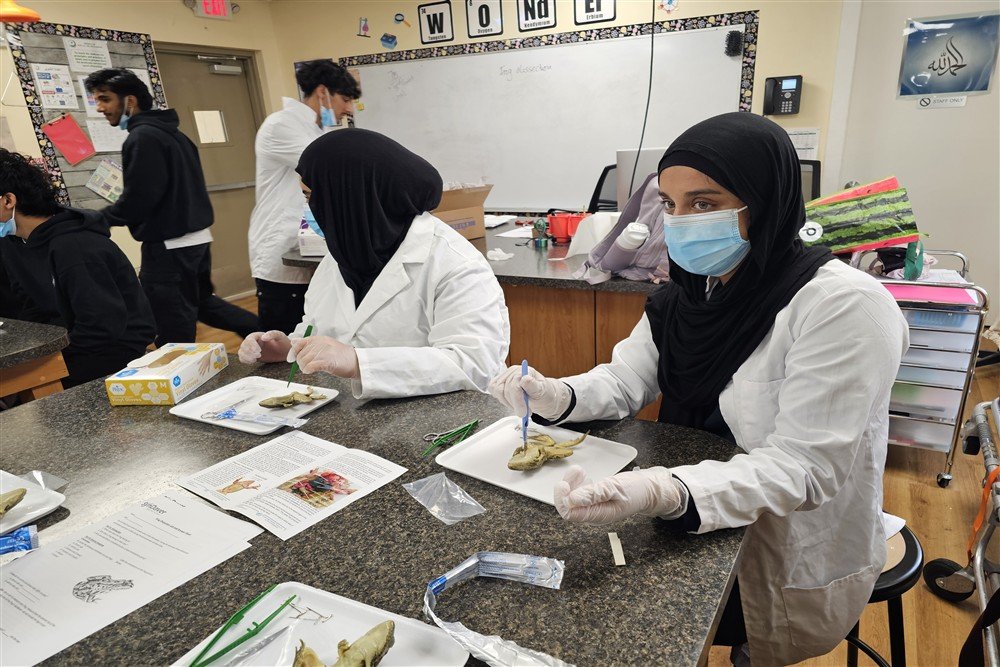
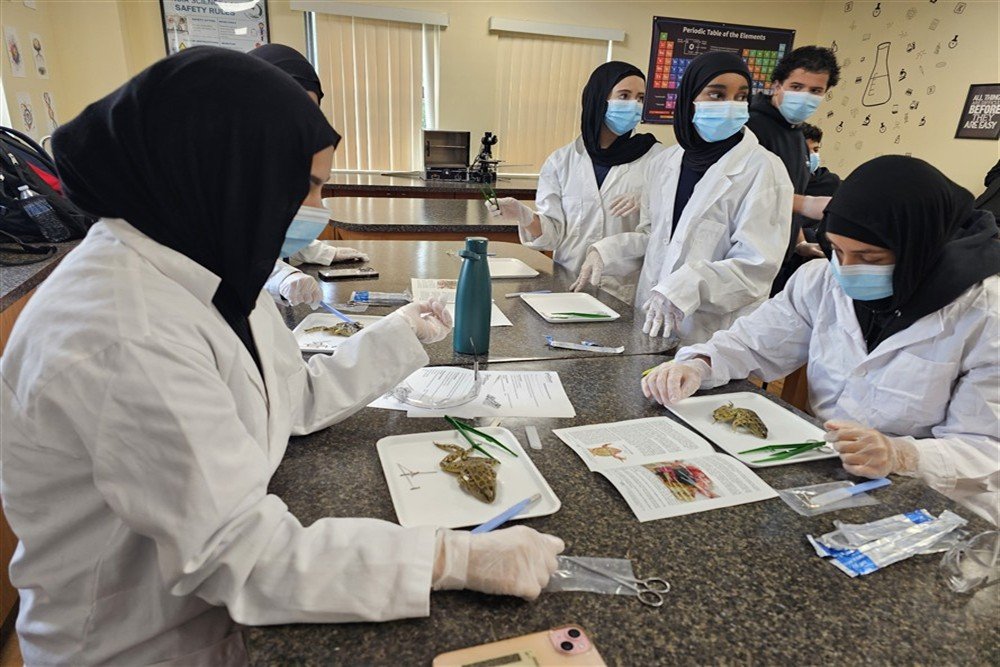
The goal of NUIA Science program is to achieve scientific literacy which can be defined as the knowledge and understanding of scientific concepts and processes required for scientific decision making, participation in civic and cultural affairs, and economic productivity.
The tenets of scientific literacy include the ability to find or determine answers to questions derived from everyday experiences, describe, explain, and predict natural phenomena, understand articles about science, engage in non-technical conversation about the validity of conclusions, identify scientific issues underlying national and local decisions, and pose explanations based on evidence derived from one’s own work.
NUIA students can achieve scientific literacy through an instructional program based on the science component of the Florida State Standards.
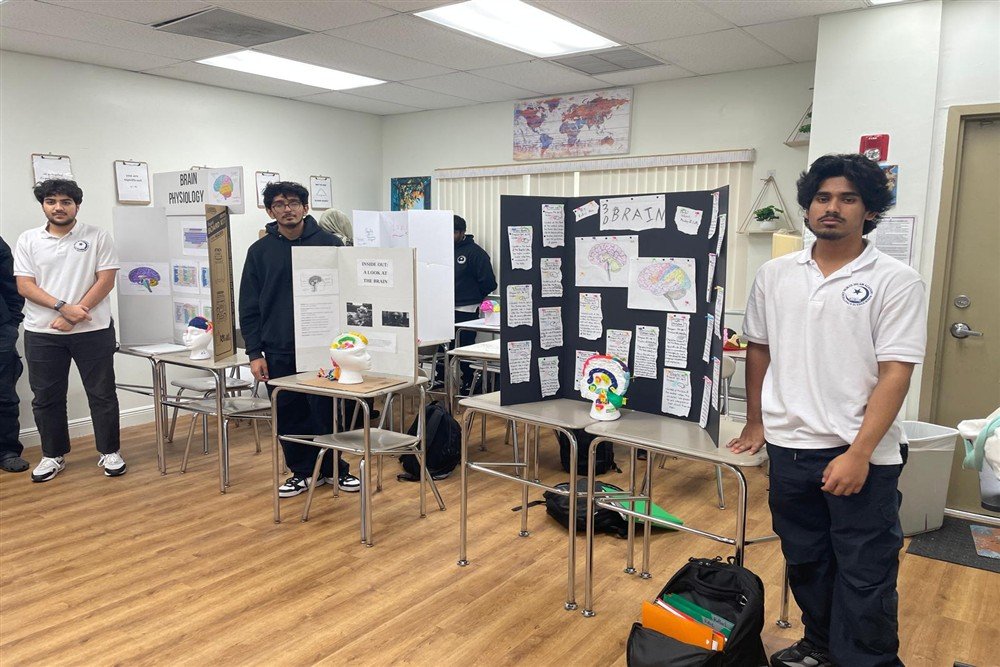
The High School Program is based on discipline specific courses including Biology, Chemistry, and Physics. Advanced courses, including AP Biology and AP Chemistry, are taught in alternate years as well as offered online via the FLVS system. All students are required to participate in multi-level science fairs by researching a scientific topic. Teachers are aware of and must incorporate Florida Standards in their instructions.
Social Studies
Realizing that people have struggled through time over similar issues is essential to an efficient and dynamic social studies program. Understanding that disputes over money, power and beliefs are at the root of human struggles and that these struggles when recorded become history, allows NUIA students to study the past while fashioning a key for the future. The Social Studies department offers students a challenging program. Incorporating the sub-disciplines of history, geography, economics and civics, while examining contemporary issues through informed discussions and analytical writings, provides students with the tools necessary to succeed in an ever-changing world that requires thoughtful human understanding.
NUIA recognizes the role played by social studies in furthering achievement across the entire curriculum. To this end the strategies and components for academic growth in reading, writing and mathematics are integrated throughout the Academy’s Social Studies program wherever possible. Students are encouraged to participate in both inter and intra school academic competitions to heighten their sense of academic ability and readiness.
The NUIA enrollment currently allows for self-contained individual homogeneous classrooms in grades 9 through 12. The program’s goals are to provide the Academy’s students with a rigorous program accelerated in grade 9 buttressed with on-line offerings, which when completed, will allow our students to effectively avail themselves of advanced placement offerings through on-line courses in high school.
NUIA offers the following sequence in its Social Studies program from grade 9 through grade 12.
US Government & AP US Government / Economics Grade 9
World History & AP World History Grade 10
Sociology, American History, AP Human Geography Grade 11
Sociology, American History, AP Human Geography, AP US History Grade 12
Grades 10, 11, and 12
Faculty & Staff – High School
NUIA’s faculty and staff are comprised of highly qualified individuals who demonstrate on a daily basis their commitment to students and academic learning. NUIA’s teachers are certified in their fields and actively involve students in the learning process, helping them reach their highest potential.
NUIA’s faculty and staff are constantly challenged to remain at their best and regularly are provided opportunities to participate in national and international conferences, workshops, and seminars.
Activity – Cultural Fair, Book Fair, Quranic Competition,